


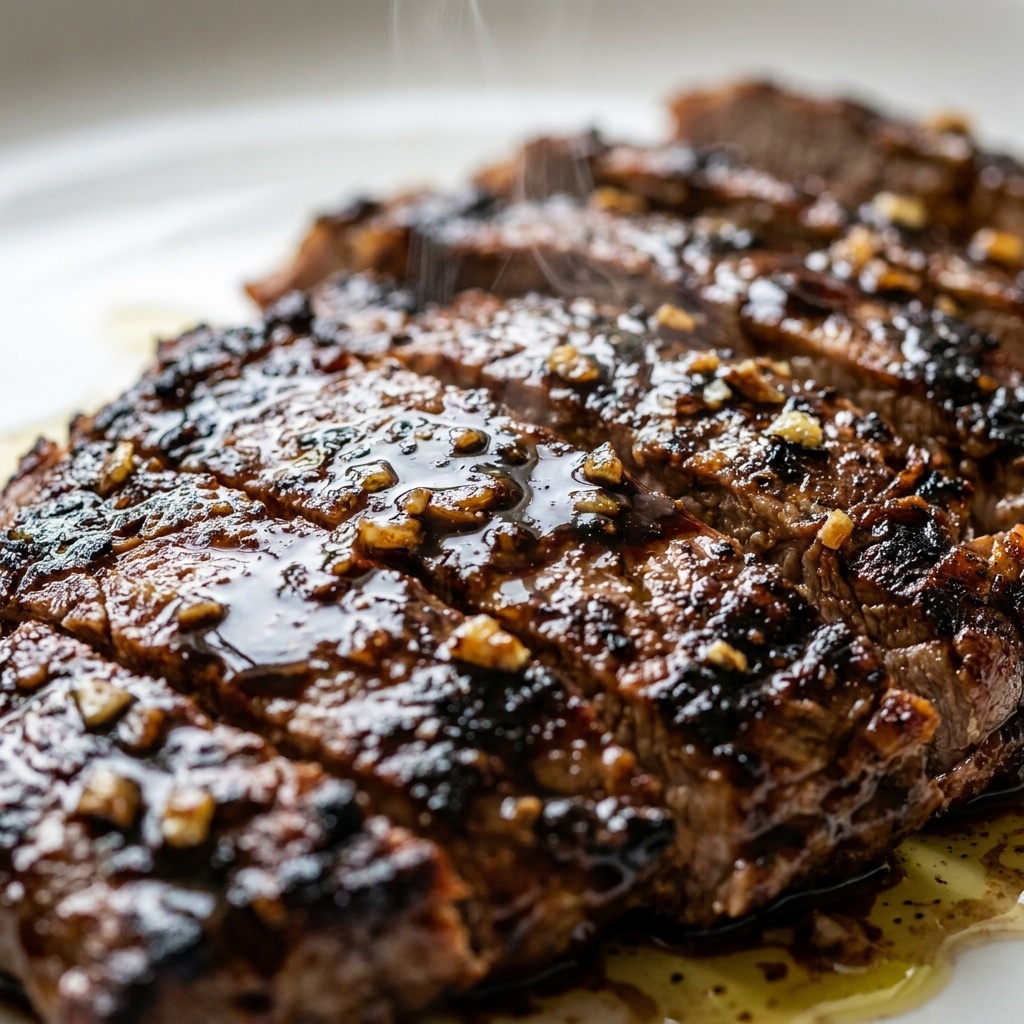
The Best Balsamic Flank Steak I Have Ever Made
Why You’ll Love This Recipe
I have a confession to make. For years, I was terrified of flank steak. I would buy it, stare at it, and then overcook it into a tough, chewy shoe leather. It felt like a curse. Every time I tried to grill it for a summer cookout, my family would politely chew and reach for the ketchup. It was disheartening.
Then I decided to get serious. I spent a whole month testing marinades, cooking times, and resting periods. I burned a few steaks and made a few that were still a little tough. But then, I landed on this combination of tangy balsamic vinegar, savory garlic, and a touch of sweetness. The first time I pulled this flank steak off the grill, my husband took one bite and said, “This is the best steak you have ever made.” That moment made all the failed experiments worth it. This recipe is the one that finally conquered my fear and turned me into a flank steak expert.
Ingredients
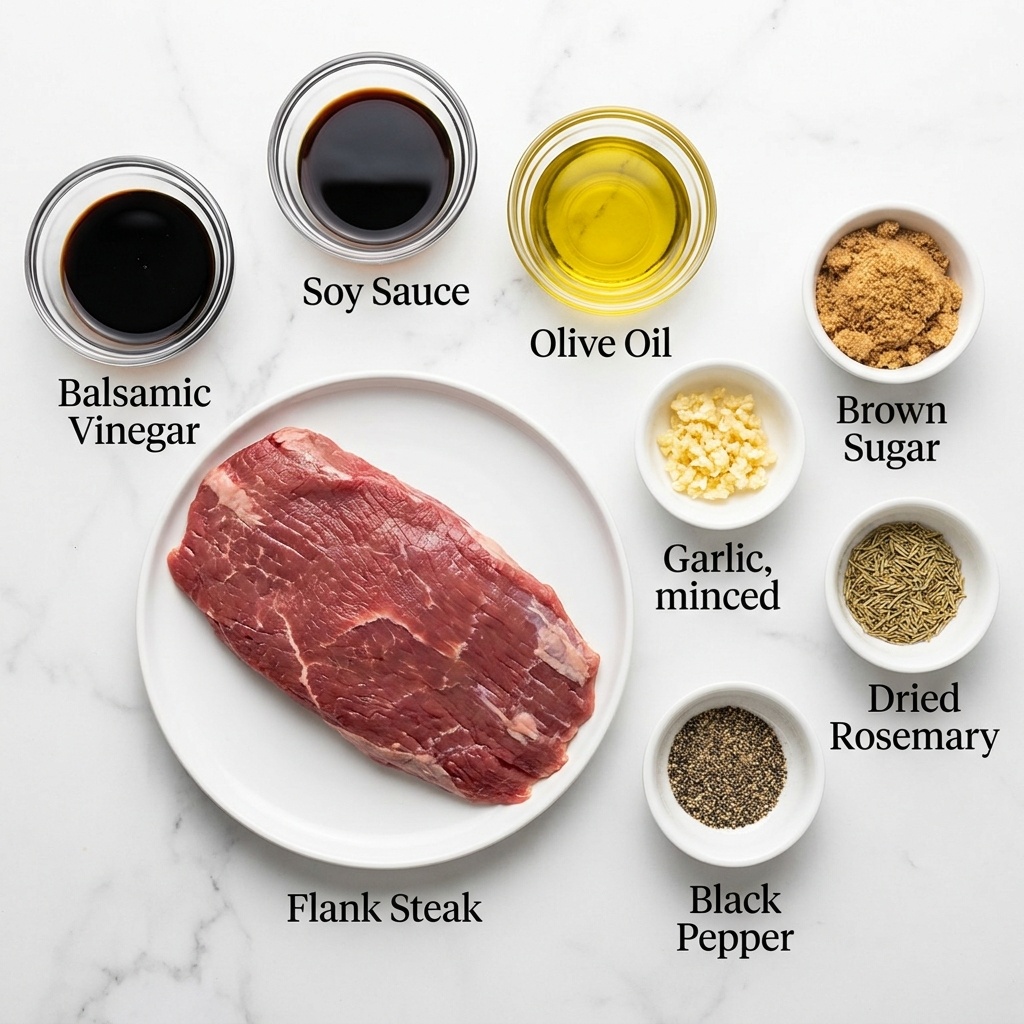
- 1 1/2 pounds flank steak
- 1/3 cup balsamic vinegar
- 1/4 cup soy sauce
- 2 tablespoons olive oil
- 3 cloves garlic, minced
- 1 tablespoon brown sugar
- 1 teaspoon dried rosemary
- 1/2 teaspoon black pepper
Step-by-Step Directions
- First, get your marinade ready. In a medium bowl, whisk together the balsamic vinegar, soy sauce, olive oil, minced garlic, brown sugar, dried rosemary, and black pepper. The smell is already incredible, a perfect mix of tangy and sweet.
- Place your flank steak in a large, resealable plastic bag. Pour the marinade over it. Seal the bag, squeezing out as much air as you can. Then, massage the marinade into the meat through the bag for about a minute. Make sure every inch of the steak is coated.
- Put the bag in the refrigerator. Let it marinate for at least 2 hours, but 4 to 6 hours is even better. Do not go longer than 8 hours, or the acid in the vinegar can start to break down the meat too much, making it mushy.
- When you are ready to cook, take the steak out of the fridge about 30 minutes before grilling. This lets it come to room temperature, which helps it cook more evenly.
- Heat your grill, grill pan, or a heavy cast-iron skillet over high heat. You want it screaming hot. Get your heaviest pan on the stove, splash in some olive oil, and let it get shimmering hot before you even think about dropping the steak in.
- Remove the steak from the marinade and let any excess drip off. Pat it dry with paper towels. This is important because a dry surface gives you a better sear.
- Place the steak on the hot grill or pan. Cook for 4 to 6 minutes per side for medium-rare. You will know it is time to flip when the steak releases easily from the grates. If it sticks, it is not ready yet.
- The most important step: let the steak rest. Transfer it to a cutting board and tent it loosely with foil. Let it sit for a full 10 minutes. Do not skip this. If you cut into it right away, all the delicious juices will run out onto the board, leaving you with a dry piece of meat.
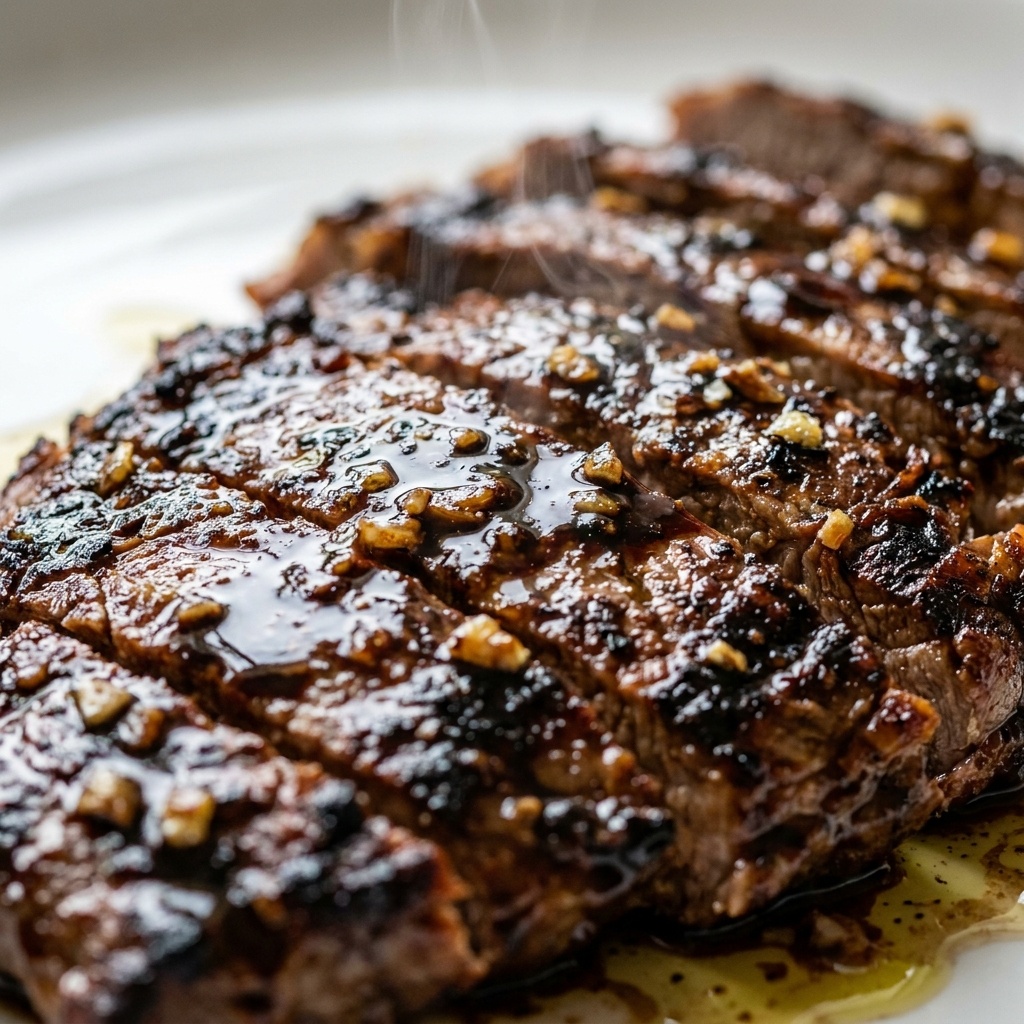
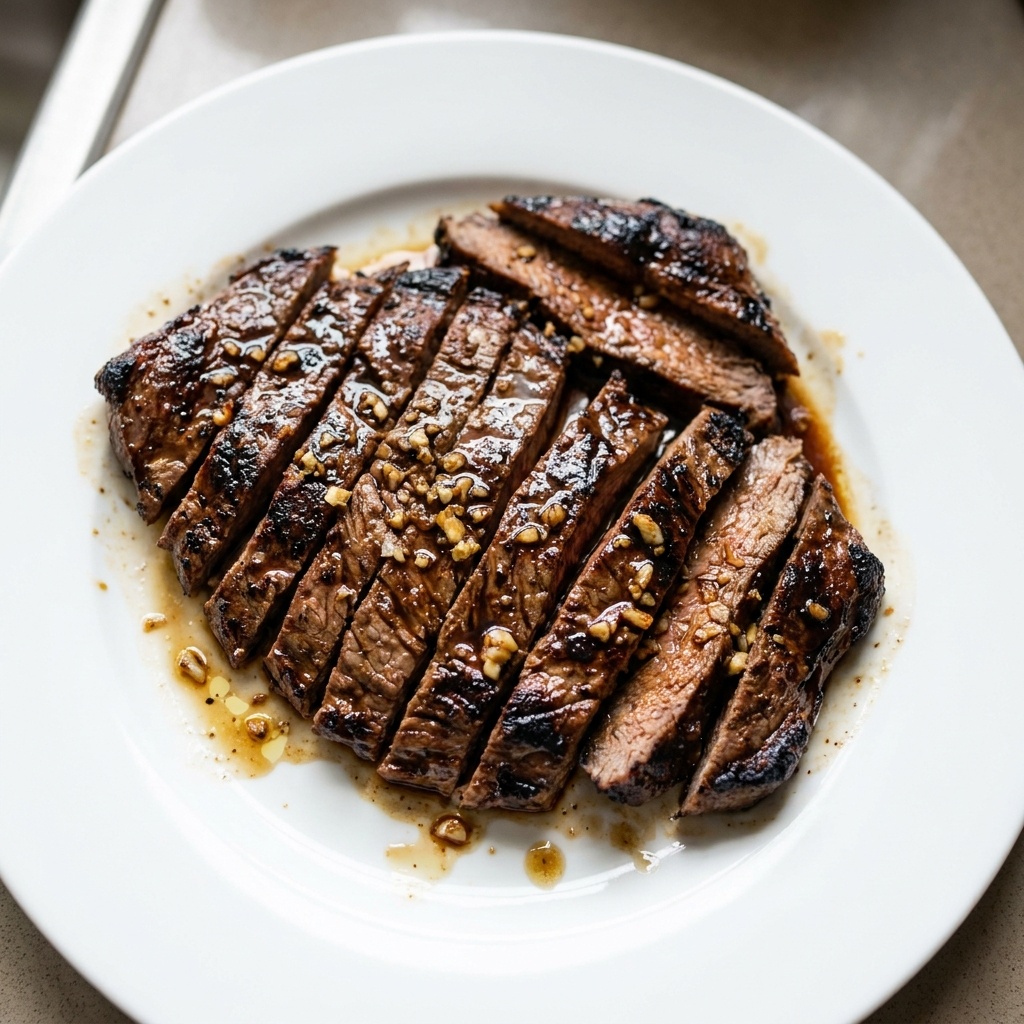
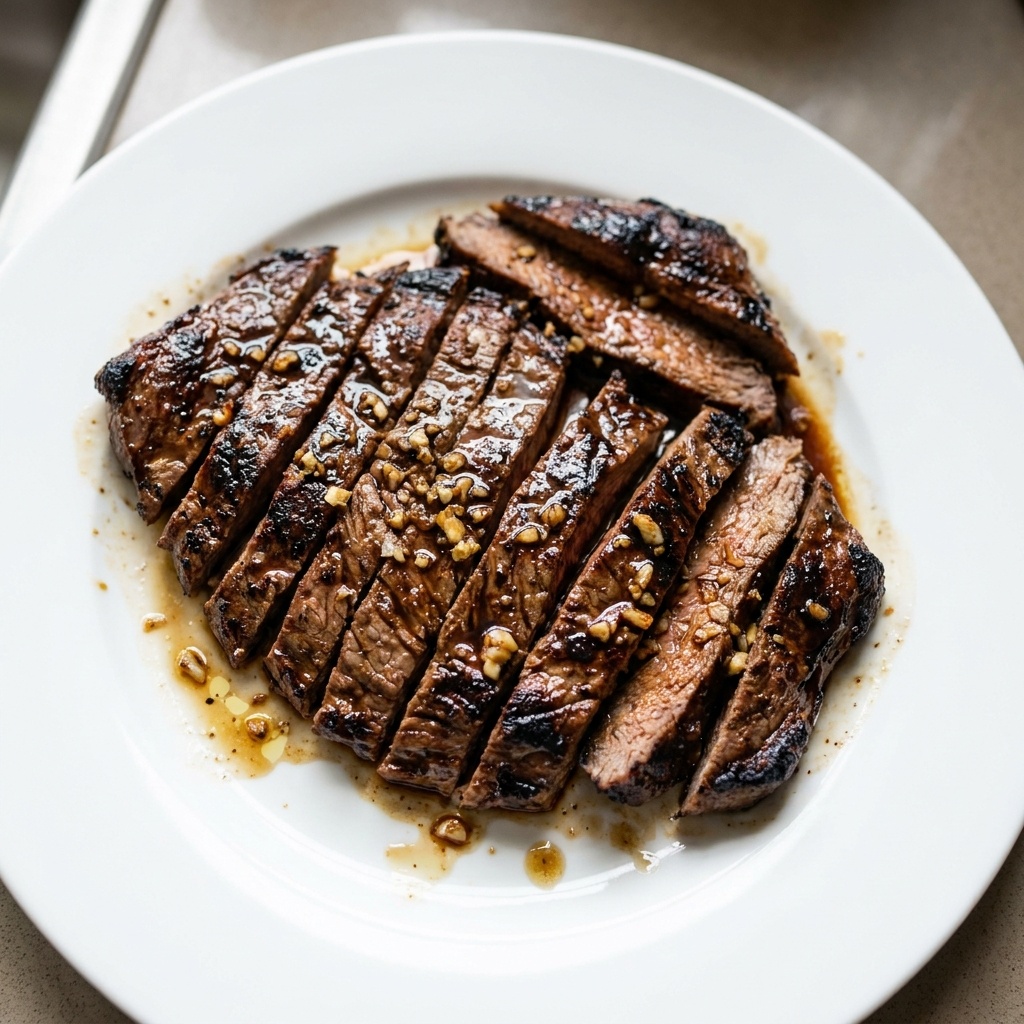
- After resting, slice the steak against the grain. This means cutting perpendicular to the long muscle fibers. Slicing against the grain shortens those fibers, making each bite incredibly tender.
Pro Tips for Success
First, always pat the steak dry before it hits the pan. A wet steak will steam instead of sear, and you will miss out on that beautiful brown crust. Second, do not rely on time alone. Use an instant-read thermometer. For medium-rare, pull the steak off the heat at 130°F to 135°F. The temperature will rise another 5 degrees while it rests. Third, let the steak rest. I cannot say this enough. That 10-minute rest is the difference between a juicy steak and a dry one. It gives the muscle fibers time to relax and reabsorb the juices.
Servings and Timing
This recipe serves 4 people. The active prep time is about 10 minutes, and the marinating time is at least 2 hours. The actual cooking time is only 8 to 12 minutes, depending on your desired doneness. Add in the 10-minute rest, and you have a fantastic meal with very little hands-on effort.
Variations and Substitutions
If you do not have balsamic vinegar, you can use a good quality red wine vinegar mixed with a teaspoon of honey. For a gluten-free version, swap the soy sauce for tamari or coconut aminos. You can also add a pinch of red pepper flakes to the marinade for a little heat. If you prefer a sweeter profile, increase the brown sugar to 2 tablespoons. This Balsamic Flank Steak is very forgiving and easy to adapt.
What to Serve With This
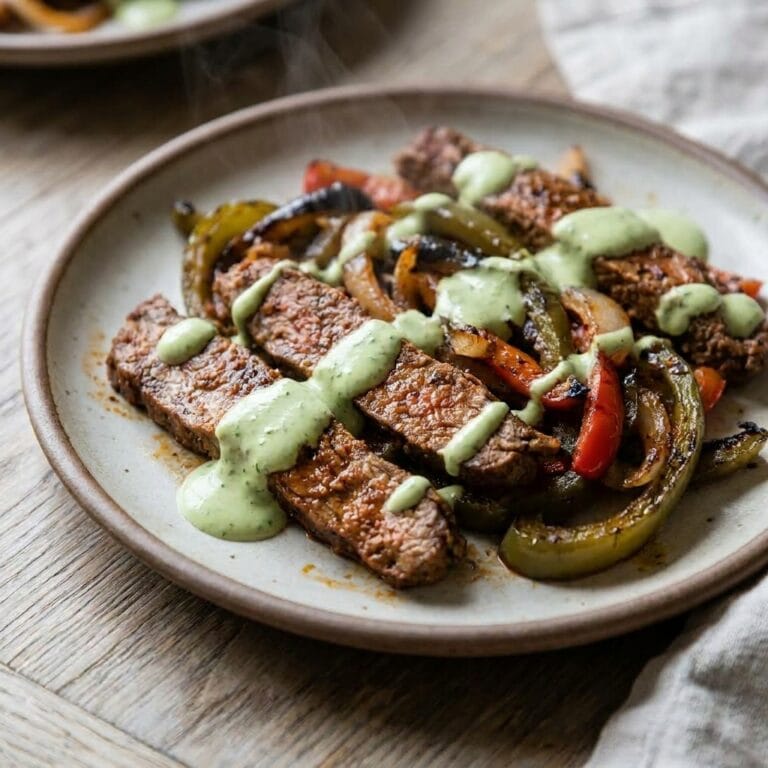
This steak is fantastic with so many sides. I love serving it with a simple roasted asparagus or a big cucumber and tomato salad. The tangy balsamic flavor also pairs beautifully with creamy mashed potatoes or a light pasta salad.
Storage and Reheating
Store any leftover Balsamic Flank Steak in an airtight container in the refrigerator for up to 3 days. To reheat, I recommend slicing it first and then quickly searing the slices in a hot skillet for about 30 seconds per side. You can also reheat it in the microwave, but the texture will be less ideal. Avoid overcooking it during reheating, as it will continue to dry out.
FAQs
Q: Can I use a different cut of beef for this recipe?
Absolutely. Skirt steak or sirloin flap meat are excellent substitutes. They have a similar texture and will benefit from the same marinade. Just keep in mind that cooking times may vary slightly, so use your thermometer.
Q: What happens if I marinate the steak for 24 hours?
The balsamic vinegar is quite acidic. If you leave it in for a full 24 hours, the acid will start to break down the protein structure too much. The steak will become mushy and lose its pleasant texture. Stick to 2 to 8 hours for the best results.
Q: Can I cook this Balsamic Flank Steak in the oven?
Yes, you can. Sear the steak in a hot cast-iron skillet on the stovetop for 2 minutes per side. Then, transfer the skillet to a preheated 400°F oven. Roast for 6 to 10 minutes, or until it reaches your desired internal temperature. This method works perfectly.
Q: Why does my flank steak always curl up when I cook it?
This happens because the thin ends cook faster and shrink. To prevent this, you can make a few shallow cuts through the fat cap on the edges of the steak before cooking. This will help it lay flat on the grill pan.
Q: My Balsamic Flank Steak came out tough. What did I do wrong?
Tough flank steak is usually a result of overcooking or slicing it incorrectly. Make sure you are cooking it to no more than medium-rare. The most common mistake is slicing with the grain instead of against it. Always slice against the grain for the most tender bites.
Conclusion
This Balsamic Flank Steak has become a weeknight hero in my house. It is simple enough for a Tuesday but impressive enough for a weekend dinner party. I hope you give it a try and finally conquer your own fear of flank steak. Let me know how it turns out for you in the comments below. I love hearing your stories.
 | ||||||||||||||||||||||||||||||||||||||||||||||||||
| ||||||||||||||||||||||||||||||||||||||||||||||||||